Google+
Showing posts with label Regency Man Monday. Show all posts

6.12.2017

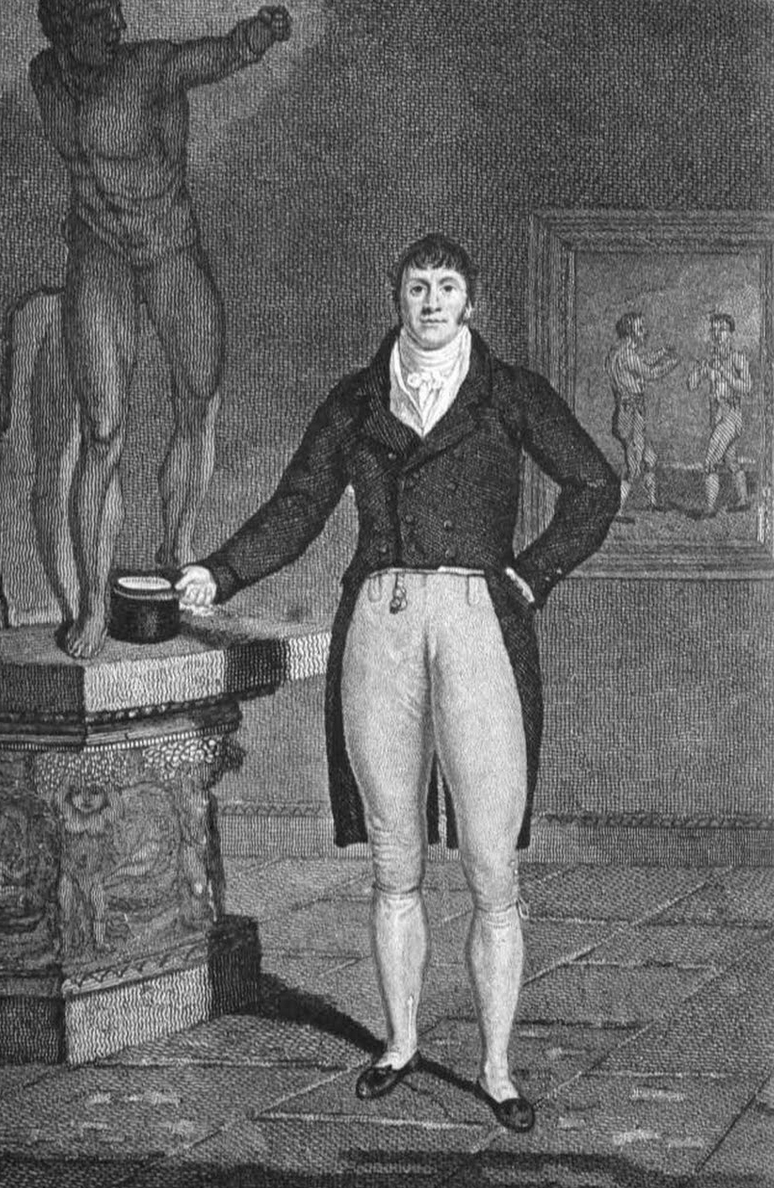
Regency Man Monday - Tom Cribb

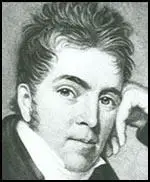
Tom Cribb etching.jpg
Tom Cribb (July 8, 1781 - May 11, 1848)

Tom Cribb was an English bare-knuckle boxer of the 19th century, so successful that he became world champion.

Cribb was born near Bristol but moved to London before starting professional fighting. He undertook a series of fights between 1805 and 1812.   
In 1810 Cribb was awarded the British title. On 10 December 1810 he fought an American, former slave Tom Molineaux, at Shenington Hollow in Oxfordshire. Cribb beat Molineaux in 35 rounds and became World champion. The fight was controversial for two reasons: Molineaux was injured when the crowd invaded the ring, and Cribb at one point seemed to have taken longer than the specified time to return to the centre of the ring. Cribb retained his title in 1811 by beating Molineaux at Thistleton Gap in Rutland in 11 rounds before a large crowd. Cribb had also beaten Molineaux's trainer Bill Richmond. 
In 1812, aged 31, he retired to become a coal merchant (and part-time boxing trainer). Later he became a publican, running the Union Arms, Panton Street, close to Haymarket in central London. His career has been commemorated with the name of a pub and in literature.

5.08.2017

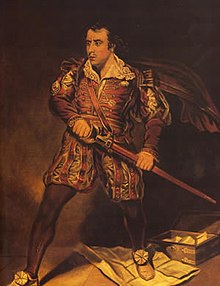
Regency Man Monday - Edmund Kean

Kean (Giles Overreach).jpg
Edmund Kean
(4 November 1787 – 15 May 1833)

Edmund Kean (4 November 1787 – 15 May 1833) was a celebrated British Shakespearean stage actor born in England, who performed in London, Belfast, New York, Quebec, and Paris among other places. He was well known for his short stature, tumultuous personal life, and controversial divorce.

Here's a bit about his rise as an actor:
For several years, his prospects were very gloomy, but in 1814, the committee of Drury Lane Theatre, which was on the verge of bankruptcy, resolved to give him a chance among the "experiments" they were making to win a return of popularity. When the expectation of his first appearance in London was close upon him, he was so feverish that he exclaimed, "If I succeed I shall go mad." Unable to afford medical treatment for some time, his elder son died the day after he signed the three-year Drury Lane contract.

His opening at Drury Lane on 26 January 1814 as Shylock roused the audience to almost uncontrollable enthusiasm. Contemporaries recognized that Kean had brought dignity and humanity to his portrayal of the character. Jane Austen refers to his popularity in a letter to her sister Cassandra dated 2 March 1814: "Places are secured at Drury Lane for Saturday, but so great is the rage for seeing Kean that only a third and fourth row could be got". Successive appearances in Richard III, Hamlet, Othello, Macbeth and King Lear demonstrated his mastery of the range of tragic emotion. His triumph was so great that he himself said on one occasion, "I could not feel the stage under me."

In 1817, a local playwright named Charles Bucke submitted his play The Italians, or; The Fatal Accusation to Drury Lane, for which Kean was to play the lead. The play was well received by both council and actors until Kean seemed to have a change of heart and began to make several offhand remarks that his part was not big enough for him. Then, after a performance where Kean went out of his way to botch the opening night of Switzerland by historical novelist Jane Porter in February 1819, for whom Kean had had a personal dislike, Bucke pulled the play out of contempt for Kean's conduct. After much cajoling to still perform the play by the theater staff, Mr. Bucke then later had it republished with a preface concerning the incident, including excerpts from correspondences between the involved parties, which was later challenged in two books, The Assailant Assailed and A Defense of Edmund Kean, Esq. The result was loss of face on both sides and the play being performed anyway on 3 April 1819 to a disastrous reception thanks to the controversy already surrounding the play and Kean's previous conduct.

On 29 November 1820, Kean appeared for the first time in New York City, as Richard III. The success of his visit to America was unequivocal, although he fell into a vexatious dispute with the press. In 1821, he appeared in Boston with Mary Ann Duff in The Distrest Mother, by Ambrose Philips, an adaptation of Racine's Andromaque. On 4 June 1821, he returned to England.

Kean was the first to restore the tragic ending to Shakespeare's King Lear, which had been replaced on stage since 1681 by Nahum Tate's happy ending adaptation The History of King Lear. Kean had previously acted Tate's Lear, but told his wife that the London audience "have no notion of what I can do till they see me over the dead body of Cordelia." Kean played the tragic Lear for a few performances. They were not well received, though one critic described his dying scene as "deeply affecting", and with regret, he reverted to Tate.

Read more on his Wikipedia Page

3.13.2017

Regency Man Monday - William Wordsworth

William Wordsworth
(7 April 1770 – 23 April 1850)

William Wordsworth was a major English Romantic poet who, with Samuel Taylor Coleridge, helped to launch the Romantic Age in English literature with their joint publication Lyrical Ballads (1798). 

Wordsworth's magnum opus is generally considered to be The Prelude, a semiautobiographical poem of his early years that he revised and expanded a number of times. It was posthumously titled and published, before which it was generally known as "the poem to Coleridge". Wordsworth was Britain's Poet Laureate from 1843 until his death from pleurisy on 23 April 1850.

-from his Wikipedia Page


For more poems by Wordsworth

- PoemHunter.com
- PoetryFoundation.com
- Poets.org

2.13.2017

Regency Man Monday - Edward Jenner

Edward Jenner(17 May 1749 – 26 January 1823) 


Edward Jenner was an English physician and scientist who was the pioneer of smallpox vaccine, the world's first vaccine.

Noting the common observation that milkmaids were generally immune to smallpox, Jenner postulated that the pus in the blisters that milkmaids received from cowpox (a disease similar to smallpox, but much less virulent) protected them from smallpox.

On 14 May 1796, Jenner tested his hypothesis by inoculating James Phipps, an eight-year-old boy who was the son of Jenner's gardener. He scraped pus from cowpox blisters on the hands of Sarah Nelmes, a milkmaid who had caught cowpox from a cow called Blossom, whose hide now hangs on the wall of the St George's medical school library (now in Tooting). Phipps was the 17th case described in Jenner's first paper on vaccination.

Jenner inoculated Phipps in both arms that day, subsequently producing in Phipps a fever and some uneasiness, but no full-blown infection. Later, he injected Phipps with variolous material, the routine method of immunization at that time. No disease followed. The boy was later challenged with variolous material and again showed no sign of infection.

In 1803 in London, he became president of the Jennerian Society, concerned with promoting vaccination to eradicate smallpox. The Jennerian ceased operations in 1809. In 1808, with government aid, the National Vaccine Establishment was founded, but Jenner felt dishonoured by the men selected to run it and resigned his directorship. Jenner became a member of the Medical and Chirurgical Society on its founding in 1805 (now the Royal Society of Medicine) and presented several papers there. Jenner was also elected a foreign honorary member of the American Academy of Arts and Sciences in 1802, and a foreign member of the Royal Swedish Academy of Sciences in 1806.

Returning to London in 1811, Jenner observed a significant number of cases of smallpox after vaccination. He found that in these cases the severity of the illness was notably diminished by previous vaccination. In 1821, he was appointed physician extraordinary to King George IV, and was also made mayor of Berkeley and justice of the peace. He continued to investigate natural history, and in 1823, the last year of his life, he presented his "Observations on the Migration of Birds" to the Royal Society.

-from Edward Jenner's Wikipedia Page

1.18.2017

Regency Man Monday - Henry Addington, 1st Viscount Sidmouth

Henry Addington, 1st Viscount Sidmouth
(30 May 1757 – 15 February 1844)

Henry Addington, was a British statesman who served as Prime Minister from 1801 to 1804. He is best known for obtaining the Treaty of Amiens in 1802, an unfavourable peace with Napoleonic France which marked the end of the Second Coalition during the French Revolutionary Wars. When that treaty broke down he resumed the war but he was without allies and conducted a relatively weak defensive war, ahead of what would become the War of the Third Coalition. He was forced from office in favour of William Pitt the Younger, who had preceded Addington as Prime Minister.

He returned to government again as Lord President in March 1812, and, in June of the same year, became Home Secretary. As Home Secretary, Sidmouth countered revolutionary opposition, being responsible for the temporary suspension of habeas corpus in 1817 and the passage of the Six Acts in 1819. His tenure also saw the Peterloo Massacre of 1819. Sidmouth left office in 1822, succeeded as Home Secretary by Sir Robert Peel, but remained in the Cabinet as Minister without Portfolio for the next two years, fruitlessly opposing British recognition of the South American republics. He remained active in the House of Lords for the next few years, making his final speech in opposition to Catholic Emancipation in 1829 and casting his final vote against the Reform Act 1832.

-from his Wikipedia Page


12.12.2016

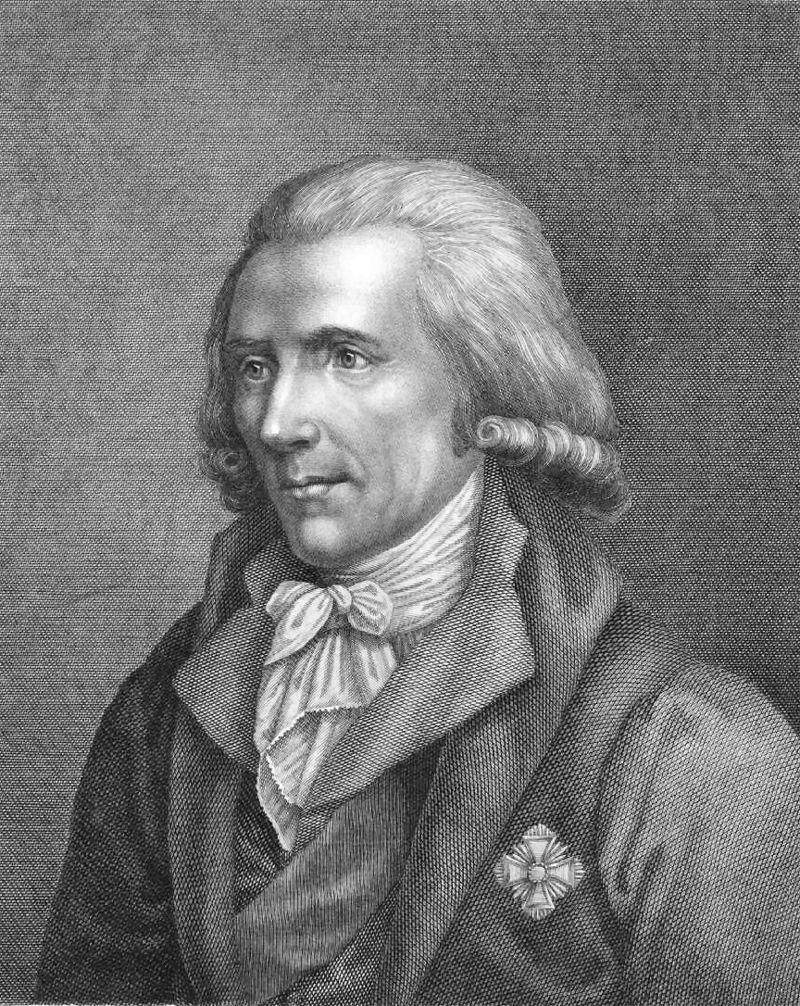
Regency Man Monday - Sir Benjamin Thompson, Count Rumford

Sir Benjamin Thompson, Count Rumford
March 26, 1753 – August 21, 1814

Sir Benjamin Thompson, Count Rumford, was an American-born British physicist and inventor whose challenges to established physical theory were part of the 19th century revolution in thermodynamics. He served as lieutenant-colonel of the King's American Dragoons, part of the British Loyalist forces, during the American Revolutionary War. After the end of the war he moved to London, where his administrative talents were recognized when he was appointed a full Colonel, and in 1784 he received a knighthood from King George III. A prolific designer, Thompson also drew designs for warships. He later moved to Bavaria and entered government service there, being appointed Bavarian Army Minister and re-organizing the army, and, in 1791, was made a Count of the Holy Roman Empire.

When the American Revolutionary War began Thompson was a man of property and standing in New England and was opposed to the uprising. He was active in recruiting loyalists to fight the rebels. This earned him the enmity of the popular party, and a mob attacked Thompson's house. He fled to the British lines, abandoning his wife, as it turned out, permanently. Thompson was welcomed by the British to whom he gave valuable information about the American forces, and became an advisor to both General Gage and Lord George Germain.

While working with the British armies in America he conducted experiments to measure the force of gunpowder, the results of which were widely acclaimed when published in 1781 in the Philosophical Transactions of the Royal Society. On the strength of this he arrived in London at the end of the war with a reputation as a scientist.

After 1799, he divided his time between France and England. With Sir Joseph Banks, he established the Royal Institution of Great Britain in 1799. The pair chose Sir Humphry Davy as the first lecturer. The institution flourished and became world famous as a result of Davy's pioneering research. His assistant, Michael Faraday established the Institution as a premier research laboratory, and also justly famous for its series of public lectures popularizing science. That tradition continues to the present, and the Royal Institution Christmas lectures attract large audiences through their TV broadcasts.

Thompson endowed the Rumford medals of the Royal Society and the American Academy of Arts and Sciences, and endowed a professorship at Harvard University. In 1803, he was elected a foreign member of the Royal Swedish Academy of Sciences.

In 1804, he married Marie-Anne Lavoisier, the widow of the great French chemist Antoine Lavoisier, his American wife—the one he abandoned in America upon the outbreak of the American Revolution—having died since his emigration. Thompson separated from his second wife after 3 years, but Thompson settled in Paris and continued his scientific work until his death on August 21, 1814. Thompson is buried in the small cemetery of Auteuil in Paris, just across from Adrien-Marie Legendre. Upon his death, his daughter from his first marriage, Sarah Thompson, inherited his title as Countess Rumford.

-from Wikipedia

9.26.2016

Regency Man Monday - George Campbell, 6th Duke of Argyll

George William Campbell, 6th Duke of Argyll GCH, PC (22 September 1768 – 22 October 1839), styled Earl of Campbell from 1768 to 1770 and Marquess of Lorne from 1770 to 1806, was a Scottish Whig politician and nobleman.

I could find little about his work during the Regency but he's listed as being part of Priny's Set. So it could very well be that he did very little worth noting until his friend became king. But I did find one mention that he was a Counciler to the Prince of Wales from 1812-1820.

Further Reading:
George Campbell, 6th Duke of Argyll - Wikipedia
The London Gazette Publication date: 13 September 1833 Issue: 19084 Page: 1675
CAMPBELL, George William, Mq. of Lorne (1768-1839), of Inveraray Castle, Argyll. - History of Parliament Online

9.12.2016

Regency Man Monday - Arthur Aikin

Arthur Aikin (1773-1854)
Arthur Aikin, FLS, FGS (19 May 1773 – 15 April 1854) was an English chemist, mineralogist and scientific writer. was a founding member of the Chemical Society (now the Royal Society of Chemistry). He first became its Treasurer in 1841, and later became the Society's second President.

He was one of the founders of the Geological Society of London in 1807 and was its honorary secretary in 1812–1817. He also gave lectures in 1813 and 1814. He contributed papers on the Wrekin and the Shropshire coalfield, among others, to the transactions of that society.[ His Manual of Mineralogy was published in 1814.

Selected Publications
A Manual of Mineralogy (1814; ed. 2, 1815)
A Dictionary of Chemistry and Mineralogy (with his brother C. R. Aikin), 2 vols. (London, 1807, 1814). Volume 1  Volume 2

Further Reading
Arthur Aikin - Wikipedia
1911 Encyclopedia Britannica/ Aikin, Arthur - Wikisource
Chemists get down to Earth by David Knight - doi: 10.1144/SP317.3 Geological Society, London, Special Publications v. 317, p. 93-103

6.13.2016

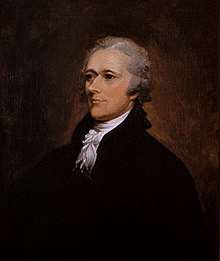
Colonial Man Monday - Alexander Hamilton

Alexander Hamilton
(January 11, 1755 or 1757 – July 12, 1804) 

In honor of Hamilton's outstanding showing at the Tony's last night!
Hamilton was a Founding Father of the United States, chief staff aide to General George Washington, one of the most influential interpreters and promoters of the U.S. Constitution, the founder of the nation's financial system, the founder of the Federalist Party, the world's first voter-based political party, the founder of the United States Coast Guard, and the founder of The New York Post newspaper. As the first Secretary of the Treasury, Hamilton was the primary author of the economic policies of the George Washington administration. Hamilton took the lead in the funding of the states' debts by the Federal government, the establishment of a national bank, a system of tariffs, and friendly trade relations with Britain. He led the Federalist Party, created largely in support of his views; he was opposed by the Democratic-Republican Party, led by Thomas Jefferson and James Madison, which despised Britain and feared that Hamilton's policies of a strong central government would weaken the American commitment to Republicanism.

Born out of wedlock, raised in the West Indies, and orphaned as a child, Hamilton pursued a college education through the help of local wealthy men. Recognized for his abilities and talent, he was sent to King's College (now Columbia University) in New York City. Hamilton played a major role in the American Revolutionary War. At the start of the war in 1775, he joined a militia company. In early 1776, he raised a provincial artillery company, to which he was appointed captain. He soon became the senior aide to General Washington, the American forces' commander-in-chief. Washington sent him on numerous important missions to tell generals what Washington wanted. After the war, Hamilton was elected to the Congress of the Confederation from New York. He resigned, to practice law, and founded the Bank of New York. Hamilton was among those dissatisfied with the weak national government. He led the Annapolis Convention, which successfully influenced Congress to issue a call for the Philadelphia Convention, in order to create a new constitution. He was an active participant at Philadelphia; and he helped achieve ratification by writing 51 of the 85 installments of The Federalist Papers, which to this day are the single most important reference for Constitutional interpretation.
Hamilton became the leading cabinet member in the new government under President Washington. Hamilton was a nationalist, who emphasized strong central government and successfully argued that the implied powers of the Constitution provided the legal authority to fund the national debt, assume states' debts, and create the government-backed Bank of the United States. These programs were funded primarily by a tariff on imports, and later also by a highly controversial tax on whiskey. Facing well-organized opposition from Jefferson and Madison, Hamilton mobilized a nationwide network of friends of the government, especially bankers and businessmen. It became the Federalist Party. A major issue splitting the parties was the Jay Treaty, largely designed by Hamilton in 1794. It established friendly economic relations with Britain to the chagrin of France and the supporters of the French Revolution. Hamilton played a central role in the Federalist party, which dominated national and state politics until it lost the election of 1800 to Jefferson's Democratic Republicans.

In 1795, he returned to the practice of law in New York. He tried to control the policies of President Adams (1797–1801). In 1798 and 99, Hamilton called for mobilization against France after the XYZ Affair and became commander of a new army, which he readied for war. However, the Quasi-War, while hard-fought at sea, was never officially declared and did not involve army action. In the end, Adams found a diplomatic solution which avoided a war with France. Hamilton's opposition to Adams' re-election helped cause his defeat in the 1800 election. When Jefferson and Aaron Burr tied for the presidency in the electoral college in 1801, Hamilton helped to defeat Burr, whom he found unprincipled, and to elect Jefferson despite philosophical differences. Hamilton continued his legal and business activities in New York City, but lost much of his national prominence within the Federalist party. When Vice President Burr ran for governor of New York state in 1804, Hamilton crusaded against him as unworthy. Taking offense at some of Hamilton's comments, Burr challenged him to a duel in 1804 and mortally wounded Hamilton, who died the next day.
You can read more on Wikipedia.

Hamilton was with Washington during the big battles in NJ - Trenton, Princeton and Monmouth.

Further Reading - Minimual list, there is a lot out there!
Alexander Hamilton by Ron Chernow (book)
Alexander Hamilton - Biography.com
Alexander Hamilton - History.com
Alexander Hamilton - PBS
Hamilton and the U.S. Constitution - PBS
Alexander Hamilton - Army History

5.23.2016

Regency Man Monday - John Jackson

John Jackson
(28 September 1769 – 7 October 1845)
Jackson was a celebrated English pugilist of the late 18th century.

He won the title Champion of England in a fight on 15 April 1795 in which he beat Daniel Mendoza. After this he created a boxing academy for gentlemen at 13 Bond Street, London. Jackson's Saloon was popular with the nobility and gentry. Lord Byron relates in his diary that not only did he receive instruction in boxing from Jackson, but also had a homosexual fling with him.

Byron referred to Jackson as the 'Emperor of Pugilism', and the leading prizefight reporter, Pierce Egan, writing in Boxiana declared him to be the 'fixed star' of the 'Pugilistic Hemisphere'.
In the artist Thomas Lawrence's 1797 exhibition at the Royal Academy, an enormous painting of Satan Summoning his Legions was based upon a giant portrait of Jackson. In 1814, Jackson helped to establish the 'Pugilistic Club'.

Jackson is buried in Brompton Cemetery, London.
-Read more at Wikipedia

Further Reading:
John Jackson, English Boxer - Britannica
Gentleman John Jackson and Daniel Mendoza: Heavy Hitters of Regency Boxing - The Jane Austen Centre
The Old One-Two: Boxing in Regency England - Regina Scott
Gentleman Jackson (1769 – 1845) - Regency World
Gentlemen’s Sports in the Regency - Susana's Parlour

5.02.2016

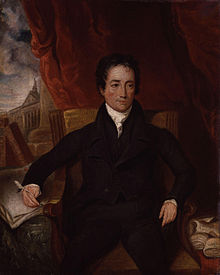
Regency Man Monday: Charles Lamb

Charles Lamb by Henry Hoppner Meyer.jpg
Charles Lamb (February 10, 1775 - December 27, 1834)

Charles Lamb was an English writer and essayist, best known for his Essays of Elia and for the children's book Tales from Shakespeare, which he produced with his sister, Mary Lamb.

He also wrote a number of poems, and was part of a literary circle in England, along with Samuel Taylor Coleridge and William Wordsworth, whom he befriended. He has been referred to by E. V. Lucas, his principal biographer, as "the most lovable figure in English literature".

The Old Familiar Faces
BY CHARLES LAMB
I have had playmates, I have had companions,
In my days of childhood, in my joyful school-days,
All, all are gone, the old familiar faces.

I have been laughing, I have been carousing,
Drinking late, sitting late, with my bosom cronies,
All, all are gone, the old familiar faces.

I loved a love once, fairest among women;
Closed are her doors on me, I must not see her —
All, all are gone, the old familiar faces.

I have a friend, a kinder friend has no man;
Like an ingrate, I left my friend abruptly;
Left him, to muse on the old familiar faces.

Ghost-like, I paced round the haunts of my childhood.
Earth seemed a desert I was bound to traverse,
Seeking to find the old familiar faces.

Friend of my bosom, thou more than a brother,
Why wert not thou born in my father's dwelling?
So might we talk of the old familiar faces —

How some they have died, and some they have left me,
And some are taken from me; all are departed;
All, all are gone, the old familiar faces.

Further Reading:

Charles Lamb - Wikipedia
Charles Lamb - Biography
Charles Lamb - Encyclopedia Britannica
Charles Lamb - The Charles Lamb Society
Charles Lamb - Poetry Foundation

3.14.2016

Regency Man Monday - James Gillray

James Gillray (13 August 1756/7 – 1 June 1815)

James Gillray was an English caricaturist and printmaker famous for his etched political and social satires, mainly published between 1792 and 1810.

Gillray has been called "the father of the political cartoon", with his works satirizing George III, prime ministers and generals. Regarded as being one of the two most influential cartoonists, the other being William Hogarth, Gillray's wit and humour, knowledge of life, fertility of resource, keen sense of the ludicrous, and beauty of execution, at once gave him the first place among caricaturists.


To browse some of his prints you can find them at the Princeton University Digital Collection and you can also purchase copies of his prints from art.com.

Further Reading:
James Gillray: Caricaturist - http://www.james-gillray.org/
James Gillray - Wikipedia
James Gillray - Spartacus Educational
James Gillray English caricaturist - Encyclopedia Britanica
Satire, sewers and statesmen: why James Gillray was king of the cartoon - The Guardian
Five things we learned from 'the father of the political cartoon' - CNN
Biting satire: The political caricatures of James Gillray - BBC

2.08.2016

Regency Man Monday - Pierce Egan

Pierce Egan (1772–1849)

Pierce Egan was a British journalist, sportswriter, and writer on popular culture.

Egan's parents were Irish migrants, but he may have been born in the London area. He went into the printing trade, and was a compositor for George Smeeton in 1812. He established himself as the country's leading reporter of sporting events, which at the time meant mainly prize-fights and horse-races.

It was Egan who first defined boxing as "the sweet science". Four volumes of Boxiana; or Sketches of Ancient and Modern Pugilism appeared, lavishly illustrated, between 1813 and 1824. In 1821 Egan announced the publication of a regular journal: Life in London, appearing monthly at a shilling a time. It was to be illustrated by George Cruikshank (1792–1878), and was dedicated to the King, George IV, who at one time had received Egan at court. The first edition of Life in London or, the Day and Night Scenes of Jerry Hawthorn, esq., and his elegant friend, Corinthian Tom, accompanied by Bob Logic, the Oxonian, in their rambles and sprees through the Metropolis appeared on 15 July 1821.

It is believed that Live in London help inspire Charles Dickens in writing about the everyday people of London. While Dickens may have never read this work, it created a demand for works that were written in street talk.

Further Reading

Pierce Egan - Wikipedia
Pierce Egan's Life in London - British Library
Pierce Egan - Spartacus Educational
Real Life in London - Project Gutenberg

1.11.2016

Regency Man Monday - Adam Sedgwick

Adam Sedgwick (22 March 1785 – 27 January 1873)
Brief Bio from Wikipedia:
Adam Sedgwick was one of the founders of modern geology. He proposed the Devonian period of the geological timescale. Later, he proposed the Cambrian period, based on work which he did on Welsh rock strata.
Though he had guided the young Charles Darwin in his early study of geology and continued to be on friendly terms, Sedgwick was an opponent of Darwin's theory of evolution by means of natural selection.
He studied mathematics and theology, and obtained his BA (5th Wrangler) from the University of Cambridge in 1808 and his MA in 1811. His academic mentors at Cambridge were Thomas Jones and John Dawson. He became a Fellow of Trinity College, Cambridge and Woodwardian Professor of Geology at Cambridge from 1818, holding the chair until his death in 1873. An 1851 portrait of Sedgwick by William Boxall hangs in Trinity's collection.
Sedgwick studied the geology of the British Isles and Europe. He founded the system for the classification of Cambrian rocks and with Roderick Murchison worked out the order of the Carboniferous and underlying Devonian strata. These studies were mostly carried out in the 1830s. The investigations into the Devonian meant that Sedgwick was involved with Murchison in a vigorous debate with Henry De la Beche, in what became known as the great Devonian controversy.
Sedgwick investigated the phenomena of metamorphism and concretion, and was the first to distinguish clearly between stratification, jointing, and slaty cleavage. He was elected to Fellow of the Royal Society on 1 February 1821.
There is also the:
Sedgwick Museum
Sedgwick Prize
Sedgwick Trail

Further Reading:
Adam Sedgwick - Berkeley.edu
Adam Sedgwick - Macroevolution.net
Adam Sedgwick - strangescience.net
Adam Sedgwick - encyclopedia.com
Adam Sedgwick - britannica.com
Darwin's introduction to geology - Darwin Correspondence Project
Adam Sedgwick Facts - Your Dictionary
Adam Sedgwick - Yorkshire Philosophical Society

12.08.2015

Regency Man Monday - John Disney

From Wikipedia, the free encyclopaedia

John Disney (29 May 1779 – 6 May 1857) was an English barrister and archaeologist. Born at Flintham Hall, Flintham, Nottinghamshire, he was the eldest son of John Disney, a former Anglican clergyman who became one of the founders of the Episcopal Unitarian Church, and from a long line of English Dissenters going back to Disney's great-great grandfather John Disney (rector) and earlier.

Disney was educated at home until the age of 16, when he went to Peterhouse, Cambridge. In 1798 he was admitted to the Inner Temple, and was called to the Bar in 1803. Subsequently he was appointed Recorder of Bridport in 1807 and Sheriff of Dorset in 1818. He left the post of Recorder in 1823 and at some point afterwards moved to Essex.

In 1816 his father died and Disney inherited a collection of antiquities that had been collected by his family. He began to catalogue these antiquities, and to add to the collection. The collection was further enlarged by gifts from Charles Callis Western and James Christie. His catalogue was eventually published in 1846 as Museum Disneianum, closely followed by a second edition and supplements.

Disney presented most of the sculptures in his collection to the Fitzwilliam Museum, Cambridge in 1850. In 1851 he endowed with £1,000 the Disney Professorship of Archaeology at the University of Cambridge. Upon his death in 1857 an additional £3,500 were bequested to support the Disney Professorship, and what remained of his private collection was sold by Christie's auction house.

Disney was married to Sophia Disney-Ffytche, daughter of Lewis Disney Fytche, in 1802. They had three children; two sons and a daughter. Disney was elected Fellow of the Royal Society in 1832 and Fellow of the Society of Antiquaries in 1839.

11.09.2015

Regency Man Monday - Henry Vassall-Fox 3rd Baron Holland

Henry Richard Vassall-Fox, 3rd Baron Holland, of Holland, and
3rd Baron Holland, of Foxley PC (21 November 1773 – 22 October 1840)

Henry Richard Vassall-Fox, was an English politician and a major figure in Whig politics in the early 19th century. He was born at Winterslow House, Wiltshire, the son of Stephen Fox, 2nd Baron Holland and Lady Mary, daughter of John FitzPatrick, 1st Earl of Upper Ossory and Lady Evelyn.

He served as Lord Privy Seal between 1806 and 1807 in the Ministry of All the Talents headed by Lord Grenville and as Chancellor of the Duchy of Lancaster between 1830 and 1834 and again between 1835 and his death in 1840 in the Whig administrations of Lord Grey and Lord Melbourne.

He became acquainted with Lafayette and Talleyrand in 1791 while visiting Paris. He was appointed to negotiate a treaty with American envoys James Monroe and William Pinkney.

Holland led the opposition to the Regency bill in 1811, and he attacked the orders in council and other strong measures of the government taken to counteract Napoleon's Berlin decrees. He denounced the treaty of 1813 with Sweden which bound Britain to consent to the forcible union of Norway, and he resisted the bill of 1816 for confining Napoleon in Saint Helena.

While traveling he met Lady Webster, wife of Sir Godfrey Webster in Florence and she ran away with him. They were married after her divorce from Sir Godfrey.

Further Reading

Henry Vassall-Fox, 3rd Baron Holland - Wikipedia

Henry Richard Vassall Fox, 3rd Baron Holland - Encyclopedia Britannica

Henry Richard Vassall Fox, third Baron Holland, Baron Holland of Holland in the county of Lincoln, and Baron Holland of Foxley in the county of Wilts (1773-1840) - A Web of English History

Holland, Henry Richard Vassall Fox, 3rd Baron - Encyclopedia.com

Henry Richard Vassall Fox - NNDB

10.26.2015

Regency Man Monday: The Poets - Samuel Taylor Coleridge

Samuel Taylor Coleridge
Samuel Taylor Coleridge (21 October 1772 – 25 July 1834) was an English poet, literary critic and philosopher who, with his friend William Wordsworth, was a founder of the Romantic Movement in England and a member of the Lake Poets. He wrote the poems The Rime of the Ancient Mariner and Kubla Khan, as well as the major prose work Biographia Literaria. His critical work, especially on Shakespeare, was highly influential, and he helped introduce German idealist philosophy to English-speaking culture. Coleridge coined many familiar words and phrases, including suspension of disbelief. He was a major influence on Emerson and American transcendentalism.

 Throughout his adult life Coleridge had crippling bouts of anxiety and depression; it has been speculated that he had bipolar disorder, which had not been defined during his lifetime. He was physically unhealthy, which may have stemmed from a bout of rheumatic fever and other childhood illnesses. He was treated for these conditions with laudanum, which fostered a lifelong opium addiction.

While I love both The Rime of the Ancient Mariner and Kubla Khan I went with the following poem:

Answer to a Child’s Question 

Do you ask what the birds say? The Sparrow, the Dove, The Linnet and Thrush say, “I love and I love!” In the winter they’re silent—the wind is so strong; What it says, I don’t know, but it sings a loud song. But green leaves, and blossoms, and sunny warm weather, And singing, and loving—all come back together. But the Lark is so brimful of gladness and love, The green fields below him, the blue sky above, That he sings, and he sings; and for ever sings he— “I love my Love, and my Love loves me!”

Further reading:
Samuel Taylor Coleridge - Wikipedia
Samuel Taylor Coleridge - poets.org
Samuel Taylor Coleridge - The Poetry Foundation
Samuel Taylor Coleridge - Britannica

10.05.2015

Regency Man Monday: The Poets - Lord Byron

George Gordon Byron6th Baron Byron

Lord Byron is regarded as one of the greatest British poets and is best known for his amorous lifestyle and his brilliant use of the English language. - Biography.com


She Walks in Beauty

She walks in beauty, like the night
   Of cloudless climes and starry skies;
And all that’s best of dark and bright
   Meet in her aspect and her eyes;
Thus mellowed to that tender light
   Which heaven to gaudy day denies.

One shade the more, one ray the less,
   Had half impaired the nameless grace
Which waves in every raven tress,
   Or softly lightens o’er her face;
Where thoughts serenely sweet express,
   How pure, how dear their dwelling-place.

And on that cheek, and o’er that brow,
   So soft, so calm, yet eloquent,
The smiles that win, the tints that glow,
   But tell of days in goodness spent,
A mind at peace with all below,
   A heart whose love is innocent!

To read up on Lord Byron and to read more of his poetry visit these sites:
Lord Byron - Wikipedia
Lord Byron - The Poetry Foundation
Lord Byron - Biography.com
Lord Byron - BBC

9.21.2015

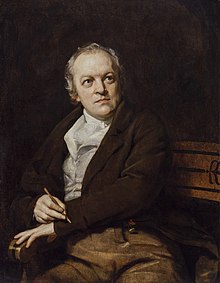
Regency Man Monday - The Poets: William Blake


Born in 1757 in London, England, William Blake began writing at an early age and claimed to have had his first vision, of a tree full of angels, at age 10. He studied engraving and grew to love Gothic art, which he incorporated into his own unique works. A misunderstood poet, artist and visionary throughout much of his life, Blake found admirers late in life and has been vastly influential since his death in 1827. - from William Blake on Biography.com

To Autumn

O Autumn, laden with fruit, and stained

With the blood of the grape, pass not, but sit
Beneath my shady roof; there thou mayst rest,
And tune thy jolly voice to my fresh pipe,
And all the daughters of the year shall dance!
Sing now the lusty song of fruits and flowers.

“The narrow bud opens her beauties to
The sun, and love runs in her thrilling veins;
Blossoms hang round the brows of Morning, and
Flourish down the bright cheek of modest Eve,
Till clust’ring Summer breaks forth into singing,
And feather’d clouds strew flowers round her head.

“The spirits of the air live on the smells
Of fruit; and Joy, with pinions light, roves round
The gardens, or sits singing in the trees.”
Thus sang the jolly Autumn as he sat;
Then rose, girded himself, and o’er the bleak
Hills fled from our sight; but left his golden load.

To read more about William Blake:
William Blake - Wikipedia
William Blake - Academy of American Poets
The William Blake Archive
William Blake - The Poetry Foundation
William Blake - Biography.com

7.13.2015

Regency Man Monday - John Wedgwood

If I just say 'Wedgwood' what comes to mind? It's probably something like this porcelain plate. A delicate and beautiful piece of pottery or dishware.  Founded in 1759, Josiah Wedgwood and Sons specialized in fine china, porcelain, and luxury accessories. At the time Queen Charlotte fell in love with the dishware and allowed Wegewood to style himself 'Potter to Her Majesty'. Since Queen Charlotte, Wedgewood has been on the tables of every British monarch and other illustrious tables around the world.  For a full history of Wedgwood you can visit their official website, www.wedgwood.com/history.

I had written in my planner John Wedgwood and when I sat down to start my research found there were two men by that name, both connected to Josiah Wedgwood.  One is Josiah's brother who was the London agent for the company until his untimely death.  It was reported that he was robbed and murdered and his body was dumped in the Thames.

The second and the focus of this post is Josiah's eldest son.  He was a partner in the firm from 1790-1793 and again 1800-1812.  Unlike the common eldest son, John was not interested in following in his father's footsteps. This was Josiah's own doing for wanted his sons to have the education he never had. John's two attempts at working for the firm didn't pan out, he didn't have the drive his father did and strived for different things.  He tried his hand at banking (backed by his father) but lacking his father's business sense wasn't able to manage and the bank failed.

John focused instead on horticulture. He was a founding member of the Royal Horticultural Society. In 1801, Wedgewood wrote to William Forsyth, gardener to King George III with the plan for this society. They wanted a group who's object was "to collect every information respecting the culture and treatment of all plants and trees, as well culinary as ornamental" (Janick). This founding was the first of it's kind and lead the way to many of the nature and plant societies in existence today.

During this research I found an interesting connection that I had no idea about.  Josiah's daughter (Johns's sister) Susannah was married to Robert Darwin. Robert's father was botanist Erasmus Darwin.  Susannah and Robert's son was Charles. You might have heard of him.

Further reading:
John Wedgewood (horticulturist) - Wikipedia
John Wedgwood (1766-1844) - Wedgwood Museum
The Founding and Founders of The Royal Horticultural Society - Horticulture at Purdue