Google+
Showing posts with label Regency Woman Wednesday. Show all posts

7.12.2017

Regency Woman Wednesday - Grace Elliot

Thomas Gainsborough - Portrait of Grace Dalrymple Elliott - Frick Collection.png
Grace Dalrymple Elliott
(1754–1823)
Grace Elliott was a Scottish courtesan and spy who resided in Paris at the time of the French Revolution. Elliott was an eyewitness to events which she detailed in her memoirs, Journal of My Life during the French Revolution (Ma Vie Sous La Révolution) published posthumously in 1859. During her lifetime she also served as the mistress to the Duke of Orléans, and the future George IV, by whom she is said to have born an illegitimate daughter. Elliott trafficked correspondence and hid French aristocrats wishing to escape the French Revolution. She was arrested several times but managed to avoid the guillotine and was released after the death of Robespierre.

Life in England
She met Lord Cholmondeley at the Pantheon in 1776. They began a liaison that lasted three years. Thomas Gainsborough painted her portrait in 1778, which is in the Frick Collection in New York City. In 1782, she had a quiet and short intrigue with the Prince of Wales (afterwards George IV), and gave birth on 30 March 1782 to a daughter who used the name Georgina Seymour (1782–1813), but was baptised at St Marylebone as Georgiana Augusta Frederica Seymour.

Grace declared that the Prince was the father of her child and The Morning Post said in January 1782 that he admitted responsibility. However, when the child, who was very dark, was first shown to the Prince he is said to have remarked, "To convince me that this is my girl they must first prove that black is white."

The Prince and many others regarded Lord Cholmondeley as the father, though the Prince's friends said that Charles William Wyndham (brother of Lord Egremont), whom she was thought to resemble, claimed paternity. Yet others thought she might have been fathered by George Selwyn. Lord Cholmondeley brought up the girl and, after her early death in 1813, looked after her only child.

Works
Elliott, Grace Dalrymple (2011) [1859], During the reign of terror : journal of my life during the French revolution, ISBN 9781230200811

Depictions in film and literature
A dramatic portrayal of part of her life is contained in the 2001 film The Lady and the Duke. English actress Lucy Russell played Grace and Jean-Claude Dreyfus played the Duke of Orleans.

Grace Elliott also appears as a major character in Hallie Rubenhold's novel The French Lesson (Doubleday, 2016).

From her Wikipedia Page

7.10.2017

Regency Man Monday - William Arden

File:William Arden, 2nd Baron Alvanley, by Edwin Henry Landseer.jpg
William Arden, 2nd Baron Alvanley
(8 January 1789 – 16 November 1849)


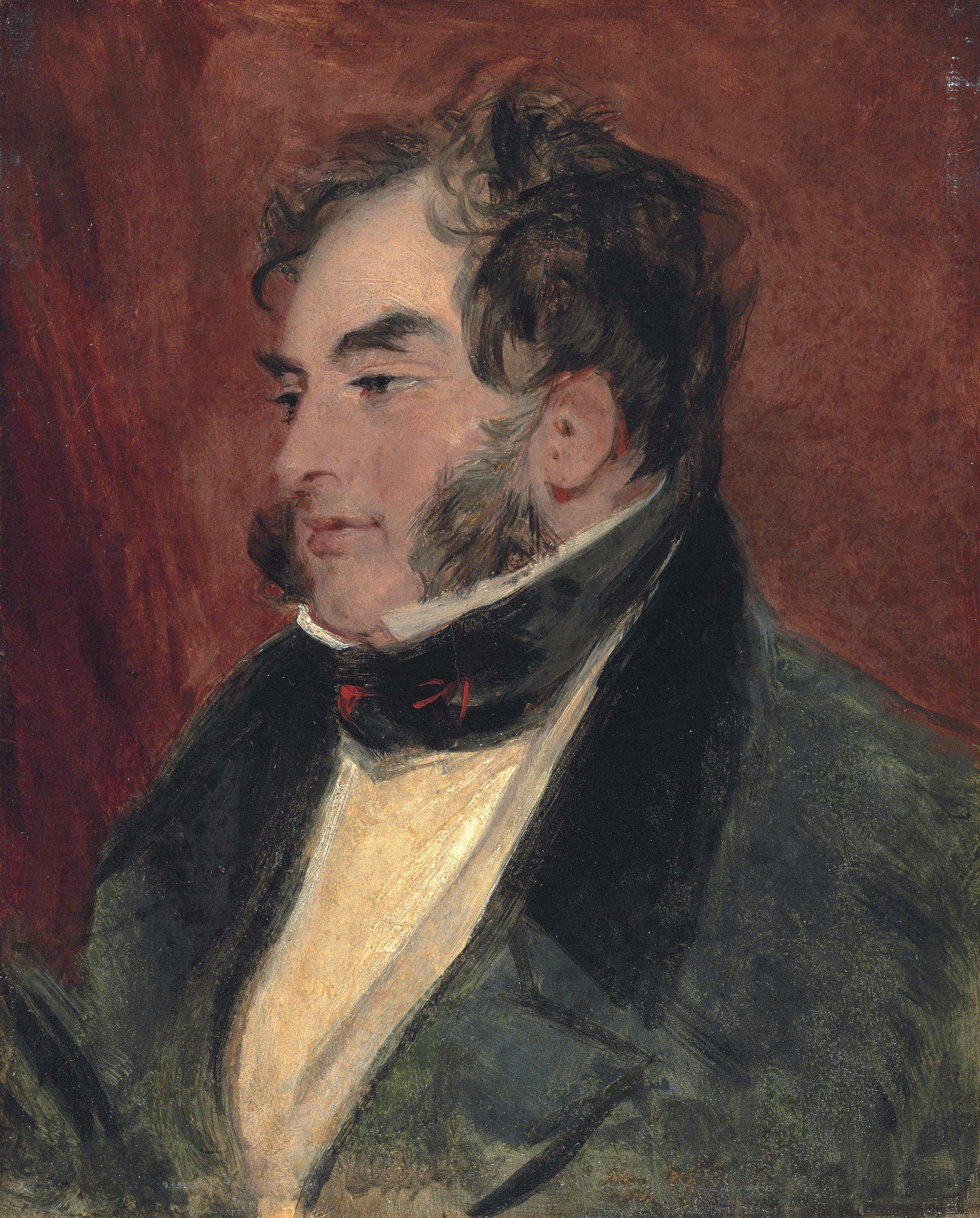
William Arden was a British Army officer, peer and socialite, who was one of a close circle of young men surrounding the Prince Regent. Lord Alvanley was a prominent Regency buck and member of the Prince Regent's circle, and was friends with Beau Brummell. He was popular in society and regarded as wittiest man of his day. He, Brummell, Henry Mildmay, and Henry Pierrepoint were considered the prime movers of Watier's club, dubbed "the Dandy Club" by Lord Byron. They were also the four hosts of the July 1813 masquerade ball at which the Prince Regent greeted Alvanley and Pierrepoint, but then "cut" Brummell and Mildmay by snubbing them, staring them in the face but not speaking to them. Brummell then said to Alvanley, "Alvanley, who's your fat friend?". The Prince Regent was not amused; this incident was the final and most public sign that Brummell was no longer favored by "Prinny".

Alvanley continued to support Brummell, sending money to his friend during Brummell's exile in France. In 1835, Alvanley fought a duel with Morgan O'Connell. According to a near contemporary report, "[Alvanley] went through the business with the most perfect sang froid, but on his way to the field he whimsically intimated a singular alarm. Having descended a hollow, 'My Lord', said he to his second, 'you get me down well enough, but', alluding to his full size, 'should I fall, I do not know how the devil you will ever get me up again.'"

He had an extremely lavish lifestyle, funded by income generated by the estates that his father had bought. His prominent position in society also allowed him to float a line of credit. However, his debts became untenable and eventually his family estates had to be sold to pay them off. Underbank Hall in Stockport was sold by auction in 1823 and most of the Bredbury estate was sold in lots in 1825. In 1827 he sold the Willington Estate to Waterloo veteran William Tomkinson, land that would become the site of Willington Hall. The Arden Hall mansion was sold in 1833. He eventually resigned his membership of White's. The death of George IV in 1830 saw Alvanley's society position deteriorate, which was furthered hampered by his limited income. He occasionally contributed to debates in the House of Lords. He did not marry and had no children. On his death, the title went to his only brother, the Hon. Colonel Richard Arden.

From his Wikipedia Page

6.14.2017

Regency Woman Wednesday - Princess Lieven

Countesslieven.jpg
Princess Dorothea von Lieven
(December 17, 1785 - January 27, 1857)


From her Wikipedia Page:
Princess Dorothea von Lieven née Benckendorff was a Baltic German noblewoman and wife of Prince Khristofor Andreyevich Lieven, Russian ambassador to London, 1812 to 1834. She was also an influential figure among many of the diplomatic, political, and social circles of 19th-century Europe.

In 1810 her husband was appointed minister to Berlin. When Tsar Alexander I appointed Count Lieven ambassador to Great Britain in 1812, Dorothea von Lieven used her intelligence, charisma, and social skills to make herself a leader of London's politically infused society, thereby contributing materially to the success of her husband's embassy.

In London, Princess Lieven cultivated friendships with the foremost statesmen of her day. As well, she and Austrian Chancellor Prince Klemens Lothar Wenzel von Metternich had a notorious liaison. She was also reputed to have had an affair with Lord Palmerston, although there is no firm proof of this.[3] She was a close friend of Lord Castlereagh, and was one of the first people to voice concerns about his increasingly strange behaviour in the weeks leading up to his suicide. Lord Grey confided in her, even sharing with her his intense grief on the death of his grandson Charles in 1831; on the other hand she admitted that the details of what became the Reform Act 1832 came as a complete surprise to her, which may be a sign that Grey despite their friendship did not entirely trust her.

In England's vibrant political environment, the Princess discovered in herself a flair for politics. She also became a leader of society; invitations to her house were the most sought after and she was the first foreigner to be elected a patroness of Almack's, London's most exclusive social club, where von Lieven introduced the waltz to England. Despite her apparently frivolous nature she had a deep religious faith, and far in advance of her time seems to have disapproved of the death penalty. She was something of a snob, and made many enemies due to her haughty manner towards those she regarded as social inferiors. Dorothea von Lieven's position as the Russian ambassadress, her friendships, and her political acumen established her as a major political force. Though outwardly deferential to her husband she was by far the stronger character and soon completely eclipsed him: London society jokingly called them "the two Russian ambassadors".

Princess Lieven "succeeded in inspiring a confidence" with prominent men "until now unknown in the annals of England", wrote Russian foreign minister Count Nesselrode. Her friendships with George IV, Prince Metternich, Lord Palmerston, the Duke of Wellington, George Canning, Count Nesselrode, Lord Grey, and François Guizot gave Dorothea Lieven the opportunity to exercise authority in the diplomatic councils of Great Britain, France, and Russia. She was a political force, a position reached by no other contemporary female.

The Princess participated, either directly or indirectly, in every major diplomatic event between 1812 and 1857. She knew "everyone in the Courts and cabinets for thirty or forty years"; she "knew all the secret annals of diplomacy", wrote a French diplomat. Lord Palmerston seems to have resented her interference, writing " a busy woman must do harm because she can do no good."

Hence, Princess Lieven's politically focused correspondence with luminaries across Europe is primary source material for students of the period. Parts of the Princess's diary, her correspondence with Lords Aberdeen and Grey, François Guizot, Prince Metternich, and her letters from London to her brother Count Alexander von Benckendorff, have been published. There is a vast trove of unpublished material in the British Library, and a scattering of unpublished correspondence in several Continental archives.

"She is a stateswoman", said the Austrian ambassador to France, "and a great lady in all the vicissitudes of life."
This was a really interesting page and I highly suggest you take a read of her full biography. She seems like she was an amazing woman to know!

5.03.2017

Regency Woman Wednesday - Anne Bronte

AnneBronte.jpg
Anne Brontë
(17 January 1820 – 28 May 1849)


*I know she's not technically a Regency Woman. But Anne was born 12 days before the Regent became King. I wanted to do this post on Anne since we are reading her novel for this month's Reading Group*

Anne Brontë was an English novelist and poet, the youngest member of the Brontë literary family.

The daughter of Patrick Brontë, a poor Irish clergyman in the Church of England, Anne Brontë lived most of her life with her family at the parish of Haworth on the Yorkshire moors. She also attended a boarding school in Mirfield between 1836 and 1837. At 19 she left Haworth and worked as a governess between 1839 and 1845. After leaving her teaching position, she fulfilled her literary ambitions. She published a volume of poetry with her sisters (Poems by Currer, Ellis, and Acton Bell, 1846) and two novels. Agnes Grey, based upon her experiences as a governess, was published in 1847. Her second and last novel, The Tenant of Wildfell Hall, which is considered to be one of the first sustained feminist novels, appeared in 1848. Like her poems, both her novels were first published under the masculine pen name of Acton Bell. Anne's life was cut short when she died of what is now suspected to be pulmonary tuberculosis at the age of 29.

Partly because the re-publication of The Tenant of Wildfell Hall was prevented by Charlotte Brontë after Anne's death, she is not as well known as her sisters. However, her novels, like those of her sisters, have become classics of English literature.

The Tenant of Wildfell Hall, was published in the last week of June 1848. It was an instant, phenomenal success; within six weeks it was sold out.

The Tenant of Wildfell Hall is perhaps amongst the most shocking of contemporary Victorian novels. In seeking to present the truth in literature, Anne's depiction of alcoholism and debauchery was profoundly disturbing to 19th-century sensibilities. Helen Graham, the tenant of the title, intrigues Gilbert Markham and gradually she reveals her past as an artist and wife of the dissipated Arthur Huntingdon. The book's brilliance lies in its revelation of the position of women at the time, and its multi-layered plot. It is easy today to underestimate the extent to which the novel challenged existing social and legal structures. May Sinclair, in 1913, said that the slamming of Helen Huntingdon's bedroom door against her husband reverberated throughout Victorian England. Anne's heroine eventually left her husband to protect their young son from his influence. She supported herself and her son by painting while living in hiding, fearful of discovery. In doing so, she violated not only social conventions, but English law. Until 1870, when the Married Women's Property Act was passed, a married woman had no independent legal existence apart from her husband; could not own property, sue for divorce, or control custody of her children. If she attempted to live apart, her husband had the right to reclaim her. If she took their child, she was liable for kidnapping. By living on her own income she was held to be stealing her husband's property, since any property she held or income she made was legally his.

In the second edition of The Tenant of Wildfell Hall, which appeared in August 1848, Anne clearly stated her intentions in writing it. She presented a forceful rebuttal to critics (Charlotte was among them) who considered her portrayal of Huntingdon overly graphic and disturbing.

When we have to do with vice and vicious characters, I maintain it is better to depict them as they really are than as they would wish to appear. To represent a bad thing in its least offensive light, is doubtless the most agreeable course for a writer of fiction to pursue; but is it the most honest, or the safest? Is it better to reveal the snares and pitfalls of life to the young and thoughtless traveller, or to cover them with branches and flowers? O Reader! if there were less of this delicate concealment of facts–this whispering 'Peace, peace', when there is no peace, there would be less of sin and misery to the young of both sexes who are left to wring their bitter knowledge from experience."

Anne sharply castigated reviewers who speculated on the sex of the authors, and the appropriateness of their writing, in words that do little to reinforce the stereotype of Anne as meek and gentle.

I am satisfied that if a book is a good one, it is so whatever the sex of the author may be. All novels are or should be written for both men and women to read, and I am at a loss to conceive how a man should permit himself to write anything that would be really disgraceful to a woman, or why a woman should be censured for writing anything that would be proper and becoming for a man."
- From Wikipedia

Anne Bronte - Wikipedia
The Tenant of Wildfell Hall - Wikipedia

4.05.2017

Regency Women Wednesday - Henrietta Ponsnby

Angelica Kauffmann, Portrait of Henrietta, Countess of Bessborough (1793).jpg
Henrietta Ponsonby, Countess of Bessborough
(16 June 1761 – 11 November 1821),

Henrietta Ponsonby, Countess of Bessborough (16 June 1761 – 11 November 1821), born Lady Henrietta Frances Spencer (generally called Harriet), was the wife of Frederick Ponsonby, 3rd Earl of Bessborough, and mother of the notorious Lady Caroline Lamb. Her father, John Spencer, 1st Earl Spencer, was a great-grandson of John Churchill, 1st Duke of Marlborough. Her sister was Georgiana Cavendish, Duchess of Devonshire.She was the great-great-great-great-aunt of Diana, Princess of Wales.
You can read more on her Wikipedia page

3.08.2017

Regency Woman Wednesday - Elizabeth Conyngham

Elizabeth Conyngham, Marchioness Conyngham
(31 July 1769 – 11 October 1861)

Elizabeth Conyngham, Marchioness Conyngham was an English courtier and noblewoman. She was the last mistress of George IV of the United Kingdom.

On 5 July 1794, Elizabeth married Henry Conyngham, Viscount Conyngham, an Irish peer. Despite her beauty, she was considered vulgar, shrewd, greedy, and unsuited to aristocratic society, on account of her common background; however, she attracted lovers and admirers, including the Tsarevitch of Russia, the future Nicholas I.

The Conynghams were not well-connected, and according to the Duke of Wellington, Elizabeth decided as early as 1806 to become a mistress of the Prince of Wales, the future King George IV. She probably became his lover in 1819, when the Prince was Prince Regent, but finally supplanted her predecessor, Isabella Seymour-Conway, Marchioness of Hertford after he became king in 1820. He became besotted with her, constantly "kissing her hand with a look of most devoted submission", and while his wife, Caroline of Brunswick, was on her divorce "trial", the king could not be seen with Lady Conyngham, and was consequently "bored and lonely". During the Coronation, George was constantly seen "nodding and winking" at her.

Lady Conyngham's liaison with the King benefited her family. Her husband was raised to the rank of a marquess in the Peerage of the United Kingdom, and sworn to the Privy Council, in the Coronation honours of 1821. He was also given several other offices, including Lord Steward of the Household and the Lieutenantcy of Windsor Castle. Her second son was Master of the Robes and First Groom of the Chamber.

Lady Conyngham was not concerned with political ambition; she concentrated on furthering the financial position of her family. Arguments with Lady Castlereagh further worsened the relationship between the King and government. She also disliked the Keeper of the Privy Purse, Benjamin Bloomfield, and was successful in having him removed in 1822. His successor, William Knighton, was a close friend of the King, who successfully cleared all his debts later in his reign.

As his life progressed, the King became dependent on Lady Conyngham on account of his temper and poor health. However weary she became of his company, his affection for her never ceased. The relationship came to an end with George's sudden death in 1830; she immediately moved from Windsor Castle to Paris. Although the King had bequeathed her all his plate and jewels, she refused the entire legacy.

Lady Conyngham lived until 1861, dying near Canterbury at the age of 92. Although excluded from court during the reigns of King William IV and Queen Victoria, her son, Francis Conyngham, 2nd Marquess Conyngham, was Lord Chamberlain to William, and, along with the Archbishop of Canterbury, brought the news of William's death to Princess Victoria, and first addressed her Your Majesty. The 2nd Marquess's daughter, Jane Churchill, was later a Lady of the Bedchamber to Queen Victoria and one of her closest friends.

-From her Wikipedia page

2.15.2017

Regency Woman Wednesday - Marguerite Gardiner

Marguerite Gardiner, Countess of Blessington
(1 September 1789 – 4 June 1849)
Marguerite Gardiner, Countess of Blessington was an Irish novelist, journalist, and literary hostess. She became acquainted with Lord Byron in Genoa and wrote a book about him. Her childhood was made unhappy by her father's character and poverty, and her early womanhood wretched by a compulsory marriage at the age of fifteen to Captain Maurice St. Leger Farmer, an English officer whose drunken habits finally brought him as a debtor to the King's Bench Prison, where he died by falling out of a window in October 1817. She left him after three months.

Marguerite later moved to Hampshire to live for five years with the family of Thomas Jenkins, a sympathetic and literary sea captain. Jenkins introduced her to the Irishman Charles John Gardiner, 1st Earl of Blessington, a widower with four children (two legitimate), seven years her senior. They married at St Mary's, Bryanston Square, Marylebone, on 16 February 1818, only four months after her first husband's death.

Of rare beauty, charm and wit, she was no less distinguished for her generosity and for the extravagant tastes she shared with her second husband, which resulted in encumbering his estates with debt. On 25 August 1822 they set out for a continental tour with Marguerite's youngest sister, the 21-year-old Mary Anne, and servants. On the way they met Count D'Orsay (who had first become an intimate of Lady Blessington in London in 1821) in Avignon on 20 November 1822, before settling at Genoa for four months from 31 March 1823. There they met Byron on several occasions, giving Lady Blessington material for her Conversations with Lord Byron.

After that they settled for the most part in Naples, where she met the Irish writer Richard Robert Madden, who was to become her biographer. They also spent time in Florence with their friend Walter Savage Landor, author of the Imaginary Conversations which she greatly admired.

It was in Italy, on 1 December 1827, that Count D'Orsay married Harriet Gardiner, Lord Blessington's only daughter by his former wife. The Blessingtons and the newly-wed couple moved to Paris towards the end of 1828, taking up residence in the Hôtel Maréchal Ney, where the Earl suddenly died at 46 of an apopleptic stroke in 1829. D'Orsay and Harriet then accompanied Lady Blessington to England, but the couple separated soon afterwards amidst much acrimony. D'Orsay continued to live with Marguerite until her death. Their home, first at Seymour Place, and afterwards Gore House, Kensington, now the site of the Royal Albert Hall, became a centre of attraction for all that was distinguished in literature, learning, art, science and fashion. Benjamin Disraeli wrote Venetia whilst staying there.

After her husband's death she supplemented her diminished income by contributing to various periodicals as well as by writing novels. She was for some years editor of The Book of Beauty and The Keepsake, popular annuals of the day. In 1834 she published her Conversations with Lord Byron. Her Idler in Italy (1839–1840), and Idler in France (1841) were popular for their personal gossip and anecdotes, descriptions of nature and sentiment.

Early in 1849, Count D'Orsay left Gore House to escape his creditors; subsequently the furniture and decorations were sold in a public sale successfully discharging Lady Blessington's debts. Lady Blessington joined the Count in Paris, where she died on 4 June 1849 of a burst heart. On examination it was found that her heart was three times normal size.

-from her Wikipedia Page

1.04.2017

Regency Woman Wednesday - Mary Brunton

Mary Brunton
(1 November 1778 – 7 December 1818)

Mary Brunton was a Scottish novelist. She started to write her first novel, Self-Control in 1809 and it was published in 1811. Jane Austen had reservations, describing it in a letter as an "excellently-meant, elegantly-written work, without anything of Nature or Probability in it." Self-Control was widely read and went into its third edition in 1812. A French translation (Laure Montreville, ou l’Empire sur soimême) appeared in Paris in 1829. The anonymous novels Things by their Right Names (1812) and Rhoda by Frances Jacson were initially ascribed to her as well.

The other novel that Mary Brunton completed was Discipline (1814). Like Walter Scott's Waverley, published in the same year, it had Highland scenes that were much appreciated. It went into three editions in two years. The Bruntons spent some time in London in 1815 and Mary began to learn Gaelic in the same year. She then planned a series of domestic stories, of which one, Emmeline, was far enough advanced when she died for her husband to include it in an 1819 memorial volume, along with a Memoir and extracts from her travel diary. The story described with a sympathy unusual in that period how a divorced woman's marriage is destroyed by her feelings of guilt and the ostracism she suffers.

The success of Brunton's novels seems to have lain in combining a strongly moral, religious stance with events that stretched or broke the rules of society.

The Works of Mary Brunton appeared in 1820 and further editions of her first two novels in 1832, 1837 and 1852. However, the popularity of her novels was immediate but somewhat short-lived: "They rose very fast into celebrity, and their popularity seems to have as quickly sunk away," as her husband put it in retrospect. Modern editions have appeared of Self-Control (London: Pandora, 1986), Discipline (London: Pandora, 1986; Boston, MA: Unwin Hyman, 1987) and Emmeline (London: Routledge, 1992, facsimile of 1819 edition).

Alexander Brunton had a volume of Sermons and Lectures published in 1818, Outlines of Persian Grammar in 1822, and Forms of Public Worship in the Church of Scotland in 1848. He was appointed moderator of the General Assembly of the Church of Scotland in May 1823, and served also as convenor (chair) of the Indian Mission Committee in 1834-47. He died at Coupar Angus, Perthshire on 9 February 1854.
-Mary Brunton, Wikipedia

12.07.2016

Regency Woman Wednesday - Elizabeth Armistead

Elizabeth Armistead(11 July 1750 – 8 July 1842)

Elizabeth was a courtesan and, later, the spouse of statesman and politician Charles James Fox. Her relationship with and marriage to Fox was one of the most famous and controversial of their age.

Even as she supported herself with a string of wealthy lovers, Elizabeth Armistead maintained close friendships with the young politicians of the Whig party. When Richard Fitzpatrick was ordered to America with his regiment, she wrote letters to him enclosed in those of his friend Charles James Fox. Later, her drawing room at Clarges Street became a meeting place for the Foxite Whigs.

It may have been through Fox and his friends that Mrs. Armistead came to the notice of the Prince of Wales (the future George IV). Chafing for independence from his strict parents, the young prince had been drawn to Fox and his lively circle. A passionate affair with actress Mary Robinson had cooled, leaving him looking for a new mistress. According to Town and Country Magazine, the Prince spotted Mrs. Armistead about town and directed his page to make approaches. Their first encounter was reported to have taken place at an inn near Bushy Park.

Mrs. Robinson tried to rekindle the interest of her royal lover which the partisan newspapers of the day whipped up into a “severe contest” between the old mistress and the new. Because of her connection with the Opposition Whigs, Elizabeth Armistead came under attack from the pro-Administration press. Whatever cachet the title of royal mistress may have brought her, Mrs. Armistead soon discovered the Prince had neither the inclination nor the funds to support her in the style she had long maintained. After several months, she set off on an extended Continental Tour as a means of breaking off the affair without giving offense to the future king.

Shortly before going abroad, Mrs. Armistead acquired the lease of a small country house in Surrey called St. Ann’s Hill. The place belonged to the estate of the Duke of Marlborough and likely came to her attention though his brother Lord Robert Spencer who was one of her Whig friends and a rumoured lover. For nearly a year, beginning in the summer of 1781, Mrs. Armistead toured the European continent with a string of titled patrons. Her former lover, Lord Derby, took her to Paris and then to Spa, Belgium. Later she was accompanied by the Earl of Cholmondeley to Italy, then by Lord Coleraine back to Paris. She returned to England to find the Whigs finally in power under Lord Rockingham and her friend Charles Fox in office as Foreign Secretary. After the death of Rockingham forced Fox to resign, he was rumoured to have had an affair with Mary Robinson before beginning one with his long-time friend Elizabeth Armistead.

- from Wikipedia 


10.05.2016

Regency Woman Wednesday - Maria Edgeworth

Maria Edgeworth
(1 January 1768 – 22 May 1849)

Maria Edgeworth was a prolific Anglo-Irish writer of adults' and children's literature. She was one of the first realist writers in children's literature and was a significant figure in the evolution of the novel in Europe. She held advanced views, for a woman of her time, on estate management, politics and education, and corresponded with some of the leading literary and economic writers, including Sir Walter Scott and David Ricardo.

Edgeworth was an extremely popular author who was compared with her contemporary writers Jane Austen and Sir Walter Scott. She initially earned more than them, and used her income to help her siblings.

On a visit to London in 1813, where she was received as a literary lion, Maria met Lord Byron (whom she disliked) and Humphry Davy. She entered into a long correspondence with the ultra-Tory Sir Walter Scott after the publication of Waverley in 1814, in which he gratefully acknowledged her influence, and they formed a lasting friendship. She visited him in Scotland at Abbotsford House in 1823, where he took her on a tour of the area. The next year, Sir Walter visited Edgeworthstown. When passing through the village, one of the party wrote, "We found neither mud hovels nor naked peasantry, but snug cottages and smiles all about." A counterview was provided by another visitor who stated that the residents of Edgeworthstown treated Edgeworth with contempt, refusing even to feign politeness.

-from her Wikipedia article

Further Reading:
Maria Edgeworth - PBS
Maira Edgeworth - Encyclopedia Britannica
Maria Edgeworth by the Hon. Emily Lawless - Digital Library of UPenn
Project Gutenberg Titles byMaria Edgeworth - Digital Library of UPenn

5.06.2016

Regency Woman Wednesday - Georgiana Cavendish, Duchess of Devonshire


Georgiana Cavendish, Duchess of Devonshire (née Spencer) (7 June 1757 – 30 March 1806) was the first wife of William Cavendish, 5th Duke of Devonshire, and mother of the 6th Duke of Devonshire.

Her father, John Spencer, 1st Earl Spencer, was a great-grandson of John Churchill, 1st Duke of Marlborough. Her niece was Lady Caroline Lamb. She was the great-great-great-great-aunt of Diana, Princess of Wales.

She attained a large amount of fame in her lifetime. She became notorious for her marital arrangements, her catastrophic love affairs, and her love of gambling; she was famous for her beauty and her political campaigning; and she was a leader of fashionable style.

Lady Georgiana Spencer married the 5th Duke of Devonshire (then 25 years old) on her seventeenth birthday, 7 June 1774, at Wimbledon Parish Church. He was one of the period's most eligible bachelors.

She had a number of miscarriages before giving birth to four children: three with her husband, and an illegitimate daughter fathered by Charles Grey, 2nd Earl Grey. She also raised the Duke's illegitimate daughter, Charlotte, who was conceived with a mistress.

The Duchess of Devonshire was a celebrated beauty and socialite who gathered around her a large salon of literary and political figures. She was connected to key figures of the age such as the Prince of Wales and Marie Antoinette.

Her best friend Lady Elizabeth Foster, was the William's mistress and after Georgiana's death became his second wife.

Legacy
The Duchess was a frequent sitter in portraits, including a 1787 work by Thomas Gainsborough that was once thought lost. In 1786, Susanna Rowson, who went on to become a bestselling author, dedicated her first published work, Victoria, to the Duchess of Devonshire.

Film portrayals
The Divine Lady (1929), played by Evelyn Hall.
Berkeley Square (1933), played by Juliette Compton
The House in the Square (also titled "I'll Never Forget You" (US) and "Man of Two Worlds") (1951), played by Kathleen Byron
The Duchess (2008), played by Keira Knightley. The film, directed by Saul Dibb, is based on the biography Georgiana, Duchess of Devonshire by Amanda Foreman.

Works by Georgiana Cavendish
Emma; Or, The Unfortunate Attachment: A Sentimental Novel (1773)
The Sylph (1778)
Memorandums of the Face of the Country in Switzerland (1799)
The Passage of the Mountain of Saint Gothard (1803)

Further Reading
Georgiana Cavendish, Duchess of Devonshire - Widipedia
Georgiana Cavendish, Duchess of Devonshire (1757-1806) - Regency History
Lady Elizabeth Foster, later Duchess of Devonshire (1758-1824) - Regency History
Princess Diana and the Duchess of Devonshire: Striking similarities - The Telegraph
Georgiana Duchess of Devonshire - Houses with History
Absolute plot spoiler for “The Duchess” and the life of Georgiana, Duchess of Devonshire - Georgiana CircleL Women Healing Hsitory
EXCERPT Georgiana Duchess of Devonshire By AMANDA FOREMAN - NYTimes
Georgiana, Duchess of Devonshire - Cheryl Bolen
Georgiana Cavendish (neé Spencer) Duchess of Devonshire (1757-1806) - A Web of English History

4.06.2016

Regency Woman Wednesday - Amelia Anne Stewart, Marchioness of Londonderry

Amelia Anne Stewart, Marchioness of Londonderry
(20 February 1772 – 12 February 1829)
Bio:
Amelia Anne Stewart, Marchioness of Londonderry (20 February 1772 – 12 February 1829), from 1794 until 1821 generally known as Emily Stewart, Lady Castlereagh, was the wife of the Georgian era Irish statesman Robert Stewart, Viscount Castlereagh, who from 1812 to 1822 was British Foreign Secretary and Leader of the House of Commons. Well-connected by birth to the aristocracy and wife of a prominent politician who was Britain's leading diplomat during the close of the Napoleonic Wars, Lady Castlereagh was an influential member of Regency London's high society.

She married Robert Stewart, son of the Irish politician and landowner Robert Stewart, 1st Marquess of Londonderry, in 1794. Her husband used his courtesy title, Viscount Castlereagh, from 1796 until 1821, when he was created 2nd Marquess of Londonderry on his father's death.

They were a notably devoted couple but had no children. They did, however, care for the young Frederick Stewart while his father, Charles, Lord Castlereagh's half-brother, was serving in the army.[1] Her devotion to her husband, combined with her love of foreign travel, well equipped Emily for the life of a diplomat's wife, and she was noted for her constant willingness to accompany her husband abroad, no matter how rigorous the journey.

Although there is no doubt that she was concerned by her husband's deteriorating mental condition, which culminated in his suicide in August 1822, she may not have realised quite how serious the matter was : even days before the suicide she was insisting, in public at least, that while he had been "unwell" he was expected to recover fully. During his last days she was undoubtedly fully aware of his dangerous condition, but was forced to trust in the skill of their doctor, Charles Bankhead. Afterwards she was blamed, perhaps unfairly, by many of his friends and political colleagues for concealing the serious nature of his mental illness: Lord Liverpool, the Prime Minister, in particular accused her of deceiving him about the extent of the problem.[2]

After her husband's death Emily lived quietly in the country for almost two years. In 1824 she returned to her old social life, arousing the censure of some of her husband's friends who thought her conduct unfeeling.[3] However her health soon failed and she died in 1829.

During the Regency of George IV, Lady Castlereagh, along with Lady Jersey, Dorothea Lieven, Lady Cowper, and others, was a Lady Patroness of Almack's, one of the first and most exclusive mixed-gender social clubs in London. In their role as Patroness, they had great influence over the ton, determining social acceptance by designating who might receive "vouchers" (entrance tickets) to Almack's, thereby setting and enforcing complex, unwritten social codes of the London social elite.

Credited with having introduced the quadrille to London, Lady Castlereagh is also remembered for having Almack's doors closed, without exception, at eleven o'clock, even once turning away the Duke of Wellington.[4] Her own parties were considered dull, and her manner was somewhat eccentric: guests described her conversation as an endless flow of trivial information delivered in an oddly detached manner.

At their country home, Loring Hall, North Cray, Lady Castlereagh kept a private zoo, which featured antelopes, ostriches, kangaroos, and a notably bad-tempered tiger.

Lady Castlereagh is often mentioned in Regency novels, most famously in Georgette Heyer's Regency romances.
From Wikipedia


Further Reading:

Amelia Stewart, Lady Castlereagh, the Marchioness of Londonderry - English History Authors(There are some great resources on this post.)

Regency Women of Character: Lady Castlereagh - Regency Reader

There are a number of posts she's included in over at The Things That Catch My Eye

Lady Castlereagh (1772 – 1829) - Regency World at candicehern.com

Lady Amelia "Viscountess Castlereagh" Hobart Stewart - Find a Grave

2.03.2016

Regency Woman Wednesday - Emma, Lady Hamilton


Emma, Lady Hamilton is best remembered as the mistress of Lord Nelson and as the muse of George Romney. She was born Amy Lyon in Ness near Neston, Cheshire, England, the daughter of Henry Lyon, a blacksmith who died when she was two months old. She was raised by her mother, the former Mary Kidd, at Hawarden, and received no formal education.

Still only fifteen years old, Emma met Sir Harry Fetherstonhaugh, who hired her for several months as hostess and entertainer at a lengthy stag party at Fetherstonhaugh's Uppark country estate in the South Downs.Emma soon formed a friendship with one of the guests, the dull but sincere Honourable Charles Francis Greville, second son of the first Earl of Warwick and a member of Parliament for Warwick. It was about this time (late June-early July 1781) that she conceived a child by Fetherstonhaugh.

Soon thereafter, Emma gave up on Fetherstonhaugh, instead forming a romantic attachment to Greville. When the child (Emma Carew) was born, she was removed to be raised by a Mr. and Mrs Blackburn. As a young woman, Emma's daughter saw her mother reasonably frequently, but later when Emma fell into debt, her daughter, Emma Carew, worked abroad as a companion or governess.

Emma was at Greville's mercy and acceded to his request to change her name to "Emma Hart". Greville kept Emma in a house at Edgeware Row, but he was in love with her and, wanting a painting of her, sent her to sit for his friend, the painter George Romney. It was then that Emma became the subject of many of Romney's most famous portraits. George Romney was fascinated by her looks and ability to adapt to the ideals of the age. Romney and other artists painted her in many guises.

In 1783, Greville needed to find a rich wife to replenish his finances. Emma would be a problem his prospective wife would not accept him as a suitor if he lived openly with Emma Hart. To be rid of Emma, Greville persuaded his uncle, Sir William Hamilton, British Envoy to Naples, to take her off his hands. To promote his plan, Greville suggested to Sir William that Emma would make a very pleasing mistress, assuring him that, once married to Henrietta Middleton, he would come and fetch Emma back. Greville did not inform Emma of his plan, however, but instead suggested the trip as a prolonged holiday in Naples while he (Greville) was away in Scotland on business. Emma was thus sent to Naples, supposedly for six to eight months, little realising that she was going as the mistress of her host. She became furious when she realised what Greville had planned for her.

After several months of waiting, Emma came to understand that Greville would not be joining her and, eventually, began an affair with Sir William, then in his fifties and more than twice her age. They were married on 6 September 1791; she was twenty-six and he was sixty. The wedding gave her the title Lady Hamilton which she would use for the rest of her life.

As wife of the British Envoy, Emma welcomed Nelson in 1793, when he came to gather reinforcements against the French.Nelson returned to Naples five years later, on 22 September 1798. Nelson's adventures had prematurely aged him: he had lost an arm and most of his teeth, and was afflicted by coughing spells. Emma reportedly flung herself upon him in admiration, calling out, "Oh God, is it possible?", as she fainted against him. Nelson wrote effusively of Emma to his increasingly estranged wife, Fanny, Lady Nelson.Emma nursed Nelson under her husband's roof, and arranged a party with 1,800 guests to celebrate his 40th birthday. They soon fell in love and their affair seems to have been tolerated, and perhaps even encouraged, by the elderly Sir William, whose own health was now failing and who longed for retirement. Hamilton showed nothing but admiration and respect for Nelson, and vice versa. Emma Hamilton and Horatio Nelson were by now the two most famous Britons in the world. They were not only in love with each other, but admired each other to the point of adulation.

Emma gave birth to Nelson's daughter Horatia, on 29 January 1801[7] at Sir William's rented home in Clarges Street, 23 Piccadilly, London. By the autumn of the same year, Nelson bought Merton Place, a small ramshackle house on the outskirts of modern-day Wimbledon. There he lived openly with Emma, Sir William, and Emma's mother, in a ménage à trois that fascinated the public.[8] The newspapers reported on their every move, looking to Emma to set fashions in dress, home decoration and even dinner party menus but Emma's great days were over. She had become fat, and Nelson did not like the social life she craved. She had turned down the offer from the Royal Opera in Madrid to sing for money. Now she and Nelson tried to create a new, quieter life.

Sir William died in 1803, and Nelson returned to sea soon after to fight in the Napoleonic Wars, leaving Emma pregnant with their second child. She was desperately lonely, preoccupied with attempting to turn Merton Place into the grand home Nelson desired, and frantic for his return. The child, a girl, died a few weeks after her birth in early 1804. Emma reportedly distracted herself by gambling, and spending lavishly. Now she was free to marry Nelson, if he could only obtain a divorce.

On 21 October 1805, Nelson's fleet defeated a joint Franco-Spanish naval force at the Battle of Trafalgar. Nelson was seriously wounded during the battle and died three hours later. When the news of his death arrived in London, a messenger was sent to Merton Place to bring the news to Lady Hamilton. After Nelson's death, Emma quickly exhausted the small pension Sir William had left her and fell deeply into debt. Nelson had willed his estate to his brother; he gave Merton Place to Emma, but she depleted her finances by trying to keep it up as a monument to him. In spite of Nelson's status as a national hero, the instructions he left to the government to provide for Emma and Horatia were ignored. They showered honours on Nelson's brother instead.

Emma spent a year in a virtual debtors' prison, in the company of Horatia, before moving to France to try to escape her creditors. Turning to drinking, living in poverty in Calais, she died in January 1815, aged 49, of amoebic dysentery – an illness she probably contracted during her years in Naples. Sir William Hamilton had also suffered from amoebic dysentery.

Horatia subsequently married the Rev. Philip Ward and lived until 1881. She had ten children: Horatio Nelson (born 8 December 1822); Eleanor Phillipa (born April 1824); Marmaduke Philip Smyth (born 27 May 1825); John James Stephen (13 February 1827 – 1829); Nelson (born 8 May 1828); William George (born 8 April 1830); Edmund Nelson (1831); Horatia Nelson (born 24 November 1833), Philip (born May 1834) and Caroline (born January 1836).

Horatia never publicly acknowledged that she was the daughter of Emma Hamilton. 
(This is an abridged version of her Wikipedia entry).


Further Reading:

Emma Hamilton - National Portrait Gallery

Nelson and Lady Hamilton: A Very Public Affair - BBC

Emma Lady Hamilton - Historic UK

The mistress of Lord Nelson died on January 15th, 1815. - History Today

Lady Hamilton - The Nelson Society

Lord Nelson: Hero and...Cad! - Smithsonian

Letter from Lord Nelson to his mistress Emma Hamilton - DailyMail

1.06.2016

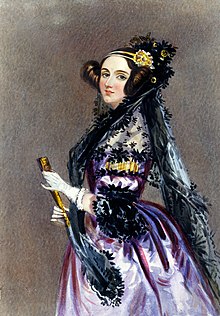
Regency Woman Wednesdays - Ada Lovelace

Ada Lovelace, 1815-1852


Augusta Ada King, Countess of Lovelace (née Byron) was a British mathematician and writer, chiefly known for her work on Charles Babbage's early mechanical general-purpose computer, the Analytical Engine. Her notes on the engine include what is recognised as the first algorithm intended to be carried out by a machine. Because of this, she is often regarded as the first computer programmer.

Lovelace was born 10 December 1815 as the only legitimate child of the poet George Gordon, Lord Byron and his wife Anne Isabella Milbanke, Baroness Wentworth. Byron separated from his wife a month after Ada was born and left England forever four months later, eventually dying of disease in the Greek War of Independence when Ada was eight years old. Ada's mother remained bitter towards Lord Byron and promoted Ada's interest in mathematics and logic in an effort to prevent her from developing what she saw as the insanity seen in her father, but Ada remained interested in him despite this (and was, upon her eventual death, buried next to him at her request).

Ada described her approach as "poetical science" and herself as an "Analyst (& Metaphysician)". As a teenager, her mathematical talents led her to an ongoing working relationship and friendship with fellow British mathematician Charles Babbage also known as 'the father of computers', and in particular, Babbage's work on the Analytical Engine. Between 1842 and 1843, she translated an article by Italian military engineer Luigi Menabrea on the engine, which she supplemented with an elaborate set of notes of her own, simply called Notes.

These notes contain what many consider to be the first computer program—that is, an algorithm designed to be carried out by a machine. Lovelace's notes are important in the early history of computers. She also developed a vision of the capability of computers to go beyond mere calculating or number-crunching, while many others, including Babbage himself, focused only on those capabilities. Her mind-set of "poetical science" led her to ask questions about the Analytical Engine (as shown in her notes) examining how individuals and society relate to technology as a collaborative tool.

Further Reading:
Ada Byron, Countess of Lovelace - Science World
Ada Byron, Lady Lovelace (1815-1852) - Yale.edu
Ada Lovelace - Biography
Ada Lovelace - Famous Scientist
Augusta Ada Byron - Encyclopedia.com
Ada Lovelace - Computer History
FindingAda.com

12.02.2015

Regency Woman Wednesday - Sarah Villiers, Countess of Jersey


Sarah Sophia Child Villiers, Countess of Jersey (4 March 1785 – 26 January 1867), was an English noblewoman, a leading figure in Regency society, and one of the patronesses of Almack's Assembly Rooms.

Through her marriage a member of the Villiers family. Lady Jersey married George Child Villiers, 5th Earl of Jersey. Her husband's mother, Frances Villiers, Countess of Jersey (also Lady Jersey), was one of the more notorious mistresses of King George IV when he was Prince of Wales.

She was a Tory, although she lacked the passion for politics. She reportedly "moved heaven and earth" against the Reform Act 1832.

Lady Jersey was known by the nickname Silence; the nickname was ironic since, famously, she almost never stopped talking. She is a recurring character in the Regency novels of Georgette Heyer, where she is presented as eccentric and unpredictable, but highly intelligent and observant, and capable of kindness and generosity.Lady Jersey was immortalized as Zenobia in Disraeli's novel Endymion. Caroline Lamb ridiculed her in Glenarvon: in revenge Lady Jersey had her barred from Almack's, the ultimate social disgrace.

Further Readings:
Sarah Villiers, Countess of Jersey - Wikipedia
Sarah Child Villiers, Countess of Jersey (1785-1867) - Regency History
“Queen Sarah” - The World of HEYERWOOD
Sarah Sophia Child, Lady Jersey (1785-1867) - A Web of English History
Villiers, Sarah Sophia Child- (1785-1867) nee Fane, wife of 5th Earl of Jersey - UK National Archives

11.04.2015

Regency Woman Wednesday - Princess Charlotte of Wales

Princess Charlotte August of Wales (January 7, 1796 - November 6, 1817)
Princess Charlotte was the only child of Prinny and his wife, Caroline of Brunswick. Since her parent's relationship was rocky at best, she was raised mostly by governesses and servants. She had brief interactions with her mother before Caroline left the country. She defied her father on his choice of husband and was happily married for a little over a year before her death due to childbirth.

Those of you who joined us for a presentation by Tim Bullamore remember him mentioning how big a deal Charlotte's death was at the time.  Charlotte's death set off tremendous mourning among the British, who had seen her as a sign of hope and a contrast both to her unpopular father and to her grandfather, whom they deemed mad.

Further Reading:

A Triple Tragedy: How Princess Charlotte’s Death in 1817 Changed Obstetrics - Jane Austen's World

The Death of Princess Charlotte of Wales An Obstetric Tragedy - The Innominate Society

Princess Charlotte of Wales - English Monarch

Princess Charlotte of Wales - Unofficial Royalty

Princess Charlotte & Prince Leopold - Georgian Index

Princess Charlotte (1796-1817) Part 1: 1796-1813 - Regency History

Princess Charlotte Augusta of Wales (1796-1817), Daughter of George IV - National Portrait Gallery

Princess Charlotte Augusta of Wales (1796-1817) - Science Museum

A royal pregnancy gone wrong - Hektoen International

10.07.2015

Regency Woman Wednesday - Caroline of Brunswick


Caroline Amelia Elizabeth of Brunswick-Wolfenbüttel (17 May 1768 – 7 August 1821), best known as Caroline of Brunswick, was Queen of the United Kingdom as the wife of King George IV from 29 January 1820 until her death in 1821. Between 1795 and 1820, she was Princess of Wales.

I'm going to do this one a bit different. In reading these articles I couldn't help but notice that there was a lot of snark going on in most of them.  I'll be sharing a quote from each article. The titles of each article is a link to the full length story.

Queen Caroline - Historic UK
Why the Prince of Wales, the son of King George III agreed to marry the fat, ugly and tactless Caroline of Brunswick is something of a mystery, except that he needed the money!

The Strange Marriage of the Prince Regent and Princess Caroline of Brunswick - Jane Austen's World
This proposed union with his cousin went much against the Prince’s wishes, and when he met the 27-year-old German Princess in 1795, he turned to Lord Malmesbury and said, “Harris, I am not well. Pray, get me a glass of brandy.”

Princess Caroline of Brunswick (1768-1821) - Regency History
Princess Caroline of Brunswick (17 May 1768 - 7 August 1821) was the hated wife of George IV. Her reckless behaviour was investigated twice by parliament and although the King failed to divorce her, she was deprived of being crowned as Queen.

George IV and Queen Caroline: a disastrous royal marriage - Regency History
Lord Malmesbury was sent to Brunswick to present the prince’s proposal and describes his first impressions of Caroline in his diary: “Pretty face — not expressive of softness — her figure not graceful — fine eyes — good hand — tolerable teeth, but going — fair hair and light eye-brows, good bust — short.”

The Wedding of the Prince of Wales and Princess Caroline - Georgian Index
Though George IV wished to divorce his wife before his Coronation, he was not rid of her until her death at 53 on August 7, 1821 of an unknown gastric disorder. Speculation included everything from poison, to a tumor, to the mysterious illness of her uncle George III. The only child of the Prince and Princess of Wales, Princess Charlotte Augusta, was born on January 7, 1796, nine months after their wedding. The couple formally separated soon after. Princess Charlotte probably inherited porphyria, the disease which plagued George III, from her closely related parents. She preceded her parents in death during a difficult childbirth in 1817.

The Queen Caroline Affair, 1820 - A Web of English History
The "Delicate Investigation" did not provide the Prince of Wales with such damning evidence of his wife's immorality that he could rid himself of her. The whole episode lowered him still further in public regard. To many it seemed monstrous that his wife should be arraigned for lapses which appeared less grave than his own. The Prince was mocked and lampooned, and he resented the attacks upon him. As his popularity waned, so Caroline's increased. In 1814 the Whigs demanded that her allowance should be increased; on 30 June she was accorded an annual grant of £50,000 Her response was that she would be happy to accept £35,000 so as to ease the taxpayers' burden. Then she she left for a period of residence abroad on the grounds that since the English Court would not give her the honours due to a Princess of Wales, she was content to be 'Caroline, a happy merry soul'.

Tart of the Week: Princess Caroline - The Duchess of Devonshire
George sued her for adultery, a crime that could strip her of her title and head. It was at this trial that Caroline claimed she had committed adultery with only one man: George, her husband. She had a solid point too because he was technically married to Mrs. Fitzherbert, whom he never divorced. The jury saw her point too and George lost his case.

For more on Caroline of Brunswick you can find a number of resources at Royalty.nu

9.02.2015

Regency Woman Wednesday - Cassandra Leigh Austen

Cassandra Leigh Austen
1739-1827

Cassandra Leigh was born in September of 1739. The Leigh family a distinguished family. Her great-great-great-great-grandfather was Sir Thomas Leigh, Lord Mayor of London. In 1561, Thomas Leigh and Roland Hill purchased Stoneleigh Abbey and a house was built on the site of the monastical buildings. Some of Leigh's descendants lived in the estate from 1561 to 1990.  Cassandra and the girls stayed at the Abbey after George's passing. You can read more about that visit here.

Casandra met George when she was visiting her uncle at Oxford.  He was so taken by her that he followed her to Bath to continue their courtship. They were married in Bath at St. Swithin’s Church, April 26, 1764. After their marriage, they moved to Hampshire where George became rector. After George's death, she moved with her daughters a number of times before settling in Chawton Cottage. Cassandra, her daughters, and Martha Lloyd lived together, sharing the running of the household.

From what letters remain we have an understanding that Cassandra and George had a happy marriage and lived a good life.

Further reading:
Posts Tagged ‘Cassandra Leigh Austen’ - Jane Austen's World
The Reverend George and Mrs. Austen: A closer look at Jane Austen’s Parents - Jane Austen Centre

8.05.2015

Regency Woman Wednesday - Cassandra Austen


We all know that Cassandra was not only Jane's sister but her best friend. It is because of the letters Jane wrote to her sister that we know so much about our beloved author.

Cassandra was born in 1773 at Steventon.  While Jane appears to have been the writer between the two sisters Cassandra was the artist.  In 1791, Cassandra produced a series of circular illustrations of British monarchs for Jane's manuscript The History of England. Her other two notable works are the paintings of Jane. One, painted in 1804, is a back view of Jane seated by a tree. The other, an incomplete frontal portrait dated circa 1810, was described by a family member as being "hideously unlike" Jane Austen's real appearance. This sketch is now housed in the National Portrait Gallery, London.

 In 1794, Cassandra became engaged to Thomas Fowle. Fowle needed money to marry and went to the Caribbean where he died of yellow fever in 1797. Cassandra inherited £1000 from him, which gave her a little financial independence but, like her sister, she never married. 

Cassandra is reported to have destroyed two thirds of Jane's letters in 1843. After the death of her mother, Cassandra lived on alone at the Chawton cottage but continued to visit friends and relations. On one such visit to her brother Frank in March 1845, she suffered a stroke. She died there a few days later on 22 March 1845, aged 72. Her body was returned to her home village of Chawton for burial at St. Nicholas' Church alongside her mother.

Further Reading:
Cassandra Austen: Jane Austen's Beloved Older Sister - JaneAusten.co.uk
The Closeness of Sisters: Imagining Cassandra and Jane by Juliette Wells - Persuasions On-Line V. 30, NO.1 (Winter 2009)
Cassandra Austen: Jane's confidante, supporter and helpmate - Jane Austen's World

*note: Source material Cassandra Austen - Wikipedia